Boilers are the workhorses for many commercial and multifamily buildings in and around Toledo, Ohio. We know these systems quite well and have worked with everything from smaller residential radiators to commercial systems that would rival those found in any major American city. Our HVAC technicians not only install these complex systems but are also among the best boiler repair companies in Toledo. So, after many a phone call and clients' help, we thought it was time to help our great clients with one of the most common issues with boilers and radiators: how to bleed air out of pipes in a boiler-radiant heating system.
The Steps
These are the most common steps to bleed a radiant heating system. Naturally, the specific steps will depend on the exact system you are running. If you would like some help or are concerned about the bleed, call a professional HVAC company like Fry to ensure that the job is done right.
Tools you will Need
- Set of screwdrivers and Wrenches
- Garden Hose
- Bucket
- Pressure Tester
Turn Off the System
The first step is to turn off your boiler and let it sit. Generally, you will want to wait a couple of hours to let the system cool down enough to prevent burns, as during the bleeding process, you will need to release both water and steam.
Locate Components
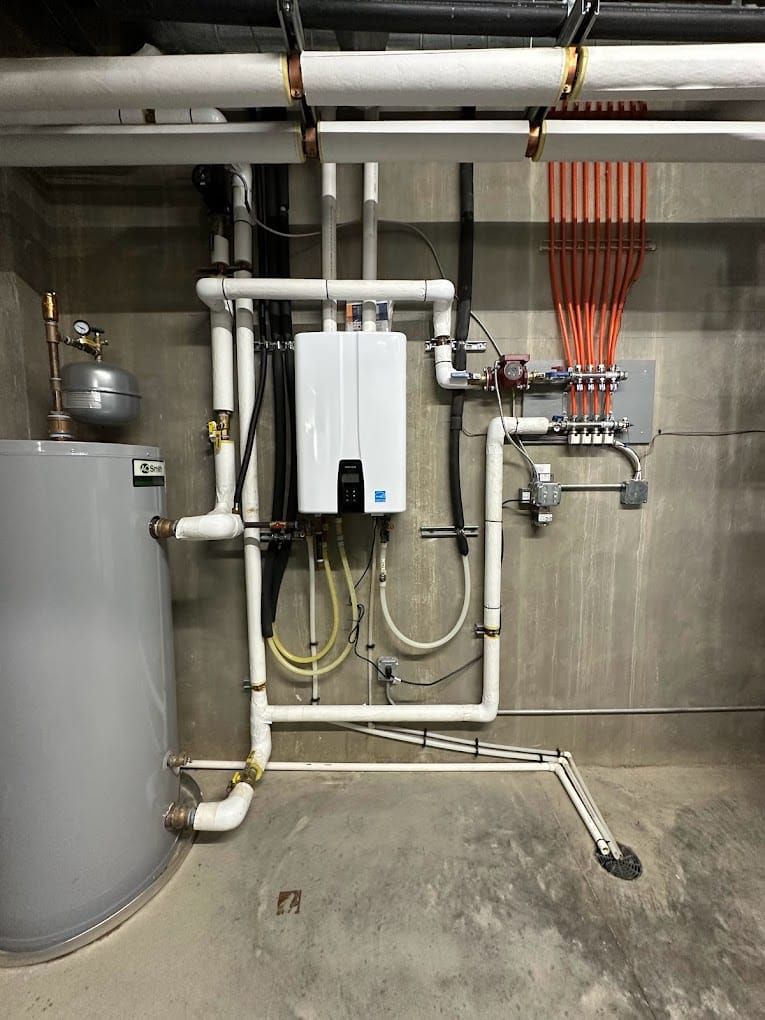
Once the boiler cools down and the system is safe to work on, locate your boiler drain valve and your water feeder valve. Normally, the water feeder valve is going to be near your boiler.
Prepare for the Purge
Once we have the components found and ready to use, the next step is the purge. You are going to first attach a garden hose to the drain valve. Make sure to tighten it, as a loose fitting will end up spraying warm water around your boiler. You will then place the other end of the hose into a nearby floor drain, or, if there is none, place a bucket at the other end.
*Note, if you are running a multizone system, you will want to close the isolation valves for all zones that are not being purged. You can repeat the process for each zone, but you cannot purge a full multizone system from a single zone.
Bleed the Zone
Single Zone
Now, we can finally start the actual bleed. You will want to open the drain valve slowly until it is fully open. You are going to let the water run through the hose until you stop hearing sputtering or air bubbles. You want a strong, consistent stream as you would get from a normal tap. You will want to keep an eye on the pressure gauge and ensure that it does not exceed 30 PSI. Ideally, you will want to see between 15 and 25 PSI.
*Note, if you have an automatic water feed valve, you will want to open the manual feed to maintain pressure during the process.
Multizone
If you have a multizone system, this is where you will rinse and repeat throughout the system. Make sure each valve is closed after you complete the bleed, and work through the isolation valves to ensure consistent pressure.
Final Checks
Finally, you will want to close the valves and double-check that hoses are clear and that all of your isolation valves are back open. You can then turn the boiler back on and check for heat circulation.
Some Tips from the Experts
Naturally, our HVAC technicians have done this a few times and know some of the tricks of the trade to help ensure your success.
- First, start closest to the boiler and bleed radiators and zones near it. You will then work your way from the boiler out for a multizone setup.
- Second, your ear is important; listening for banging or gurgling will help you find the trapped air and the zone causing the issue.
- Third, use a radiator key if you can. Some radiators have a manual bleed valve, and the radiator key can be used to release air from the top of each unit, saving time and energy, especially in larger multifamily buildings.
- Finally, make sure to keep checking your pressures. You want to keep your pressure between 15-25 PSI or 1.5-4 BAR.
If you are looking for boiler services in Toledo, OH, the team at Fry is here to help. We have the experience to repair, install, and replace commercial, multifamily, and residential boilers that will deliver for years to come. So, whether you are looking to bleed your system or replace it entirely, Fry is your guy.